Why Verified Properties Always Sell Faster
Discover why verified properties can attract serious buyers faster. Learn how clear documents, ownership verification, fair pricing and transparency make property transactions easier.
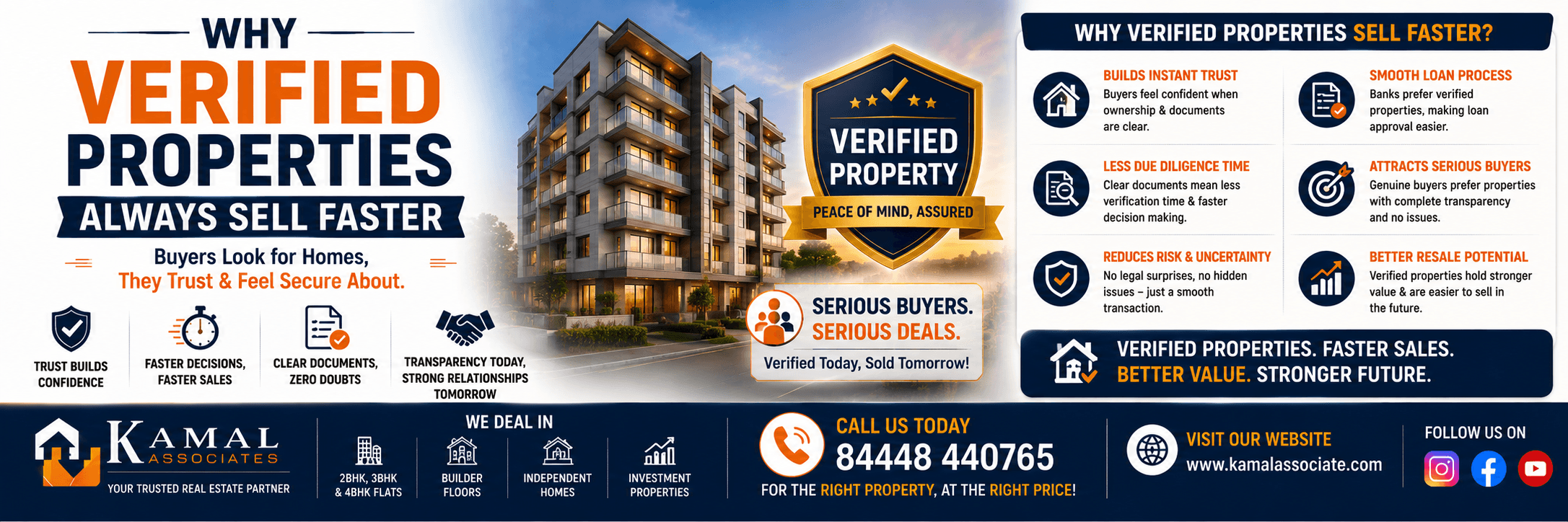
Buying a property is one of the biggest financial decisions people make. Whether it is a 2BHK flat in Dwarka Mor, a builder floor in West Delhi, or an investment property, buyers want more than an attractive price and beautiful interiors.
They want confidence.
This is why property verification has become one of the most important factors in real estate transactions. Properties with clear ownership, properly maintained documents, transparent details and fewer legal uncertainties can be easier for serious buyers to evaluate and purchase.
But does verification literally guarantee that a property will sell faster?
No. Location, pricing, condition, demand and market conditions also matter. However, a properly verified property can remove many common concerns that slow down a transaction.
In this blog, let's understand why verified properties can attract serious buyers faster and make the selling process smoother.
1. Buyers Want Confidence Before Investing
A property purchase involves a significant amount of money.
Before purchasing, buyers naturally ask:
Who owns the property?
Are the ownership documents available?
Is there any existing loan or charge?
Are the applicable property records in order?
Is the seller authorised to sell?
Are there any disputes or complications?
Can the transaction proceed smoothly?
When relevant information and documents are available for verification, buyers can make decisions with greater confidence.
Trust can reduce hesitation.
And less hesitation can help move a genuine buyer closer to a transaction.
2. Clear Ownership Makes the Property More Attractive
Ownership is one of the first things a serious buyer should verify.
A property with unclear ownership can create unnecessary uncertainty.
For example, complications may arise if:
Multiple people have ownership interests
Previous ownership records are incomplete
The seller's authority is unclear
There are unresolved disputes
Relevant documents don't match the seller's claims
A properly documented ownership history can make the property easier for a buyer and their legal adviser to evaluate.
3. Verified Documents Can Speed Up Due Diligence
When buyers decide to purchase a property, they often need to review various documents.
Depending on the property and transaction, these may include records related to:
Sale deed
Ownership
Previous ownership chain
Property tax
Applicable approvals
Existing loans or charges
Seller identity
Other relevant property records
If important documentation is missing, inconsistent or difficult to verify, the buyer may need additional time to investigate.
That can delay negotiations and the transaction.
Proper documentation can make the verification process more organised.
4. Bank Loan Buyers Often Need Additional Documentation
Many residential property buyers depend on home loans.
When a buyer applies for financing, the lender may assess the borrower's eligibility as well as the property according to its own requirements.
A property with properly organised documentation can make the lender's property-related assessment easier.
However, remember:
Bank loan eligibility or approval does not mean a property is completely risk-free.
Buyers should still conduct independent legal and physical due diligence.
5. Verified Properties Can Attract Serious Buyers
Online property listings receive enquiries from many types of people.
Some are only browsing.
Some are comparing prices.
Some aren't financially ready.
But serious buyers usually want answers to practical questions before proceeding.
A property with transparent information can help serious buyers understand:
What am I buying?
Who is selling it?
What documents are available?
What is the total cost?
Can the transaction proceed smoothly?
The clearer the answers, the easier it can be for a genuine buyer to move forward.
6. Transparency Builds Seller Credibility
A seller who is transparent about the property can create a better buying experience.
Instead of avoiding difficult questions, provide relevant information clearly.
For example:
Property size
Property type
Ownership details
Age of property
Parking
Location
Applicable documents
Asking price
Additional costs
Possession details
Transparency doesn't mean revealing information that should remain private. It means providing legitimate property-related information that buyers need for evaluation.
7. Pricing and Verification Work Together
A verified property can still remain unsold if it is overpriced.
This is an important point.
Imagine two properties:
Property A
Properly documented
Good location
Good condition
Reasonable asking price
Property B
Properly documented
Good condition
Similar location
Significantly overpriced
Even though both properties are verified, Property A may attract more buyers because its overall value is more competitive.
Therefore:
Verification + Fair Pricing = Stronger Selling Potential
8. Location Still Matters
Verification is important, but location remains a major factor in property demand.
A verified property in a well-connected location can be more attractive to buyers looking for convenience.
For buyers considering West Delhi property, factors such as:
Metro connectivity
Main roads
Markets
Schools
Hospitals
Public transportation
Parking
Neighbourhood development
can influence buyer interest.
A properly verified property combines these location advantages with greater transaction transparency.
9. Good Documentation Can Reduce Last-Minute Problems
One of the biggest frustrations in property transactions is discovering an issue after negotiations have already progressed.
For example, a buyer may suddenly discover:
Missing documents
Ownership inconsistencies
Outstanding charges
Unclear transaction terms
Unexpected property-related issues
Such discoveries can cause:
Negotiation → Delay → Renegotiation → Possible Cancellation
Early verification can help identify issues before the buyer becomes financially or emotionally committed.
10. Verified Properties Can Make Negotiations More Efficient
When a buyer trusts the documentation, negotiations can focus more on the actual commercial terms.
The discussion can move toward:
Property price
Payment schedule
Possession
Included facilities
Transaction expenses
Agreement terms
Instead of spending excessive time questioning basic ownership and documentation.
This can make the process more efficient for both buyer and seller.
11. Verification Can Improve Resale Potential
Think beyond today's sale.
If you are buying a property as an investment, you should also consider what happens when you eventually sell it.
Your future buyer will probably ask similar questions:
"Are the documents clear?"
"Can ownership be established?"
"Are there any outstanding issues?"
A property with properly maintained records can be easier for future buyers to evaluate.
This is one reason documentation should be treated as an important part of the property's long-term value.
12. What Does "Verified Property" Actually Mean?
The word verified should not be used casually.
Verification can involve different types of checks.
Legal Verification
Relevant ownership and title documents are reviewed.
Document Verification
Important property records are checked for consistency and completeness.
Physical Verification
The actual property is inspected.
Seller Verification
The seller's identity and authority are checked.
Financial Verification
Relevant loans, charges or outstanding amounts are investigated where applicable.
Market Verification
The asking price is compared with similar properties.
A property should ideally be evaluated from multiple angles.
13. Don't Confuse "Verified" With "Guaranteed"
This is extremely important.
No simple "verified" label can guarantee:
Future appreciation
Profit
Fast resale
Zero legal risk
Loan approval
Perfect construction
Property transactions involve multiple factors.
Verification simply helps reduce uncertainty when it is conducted properly.
For complicated transactions, buyers and sellers should seek advice from qualified legal and financial professionals.
14. How Sellers Can Make Their Property More Buyer-Friendly
If you're selling a property, prepare important information before advertising.
Keep Relevant Documents Organised
Maintain copies of applicable property documents.
Be Transparent About the Property
Clearly mention:
Size
Location
Property type
Age
Parking
Condition
Asking price
Avoid Misleading Claims
Don't exaggerate:
Metro distance
Property size
Amenities
Rental returns
Future appreciation
Explain the Total Cost
Tell buyers about applicable additional expenses instead of surprising them later.
Respond Quickly
Serious buyers often compare multiple properties. Prompt and clear communication can improve the overall experience.
15. How Buyers Can Check a Property Before Purchasing
Before paying token money or making a major commitment, buyers should consider:
☑ Verify seller identity
☑ Verify ownership
☑ Review relevant title documents
☑ Check applicable property records
☑ Check for existing loans or charges
☑ Inspect the actual property
☑ Verify property details
☑ Compare the asking price
☑ Understand all additional costs
☑ Review the agreement carefully
☑ Seek professional legal advice where required
This checklist can help buyers make a more informed decision.
16. Why Verified Properties Can Have a Competitive Advantage
In a competitive property market, buyers have choices.
If several properties have similar:
Price
Size
Location
Construction quality
the property with better transparency and documentation may stand out.
Buyers don't just purchase walls, rooms and flooring.
They are also purchasing peace of mind and confidence in the transaction.
Verified Property vs Unclear Property
FactorVerified PropertyUnclear PropertyOwnershipEasier to establishMay require investigationDocumentsOrganised for reviewMissing/inconsistent information possibleBuyer confidenceGenerally higherOften lowerDue diligenceMore straightforwardPotentially slowerLoan processCan be easier to evaluateMay face additional questionsNegotiationMore focusedCan involve uncertaintyResaleEasier to explain to future buyersPotential concerns
Final Thoughts
A verified property doesn't automatically sell faster. Price, location, property condition, demand, presentation and market conditions all play important roles.
But verification can remove one of the biggest barriers in real estate:
Uncertainty.
When buyers can confidently understand the property's ownership, documentation, condition and transaction terms, they may be more comfortable moving forward.
For sellers, the message is simple:
Don't just sell the property. Sell with transparency.
For buyers:
Don't just look at the property. Verify what you're buying.
Whether you're looking for a 2BHK flat in Dwarka Mor, a builder floor in West Delhi, or an investment property, proper due diligence should come before a major financial commitment.
Kamal Associates helps buyers explore residential property options in West Delhi according to their budget and requirements.
Website: https://www.kamalassociate.com/
Call: 84448 440765
Related Articles

How Infrastructure Projects Increase Property Value
Learn how metro, roads, transport and infrastructure projects can impact property value, rental demand and resale potential in West Delhi.

5 Questions Every Buyer Should Ask Before Paying Token Money
Buying property in West Delhi? Learn 5 important questions to ask before paying token money, including ownership, documents, refund terms, total cost and sale conditions.

Why Location Beats Luxury Every Time
Discover why location can matter more than luxury when buying property in West Delhi. Learn how connectivity, metro access, neighbourhood and resale demand affect property value.